Leave Your Message

How to Choose a Gravity Casting Supplier?

Choosing a Gravity Casting supplier is not just a price comparison. It is a decision about process control, repeatability, and the evidence behind each promise. Grand View Research estimated the broader global die-casting market at approximately $76.7 billion in 2023; that figure covers more than gravity casting, but it shows the scale and competitiveness of the sector. Market growth does not guarantee a good supplier. Your part still depends on the right alloy, sound tooling, and stable production settings.

John Campbell, a leading casting researcher and author of Castings, wrote: “The quality of a casting is determined by the quality of the liquid metal.” That principle gives buyers a useful starting point. Ask how the supplier verifies alloy chemistry, manages melt cleanliness, and records pouring temperatures. Then look beyond the paperwork. On a plant visit, inspect the furnace logs, sample labels, and defect records. Ask to see how a rejected part is traced back to its production batch.

Details matter. A smooth sample may hide inconsistent results across a full run. Request data on dimensional capability, porosity inspection, and delivery performance, and confirm that the figures apply to parts like yours. A tidy audit sheet can still miss a weak feedback loop. I would treat unanswered questions as useful evidence, not a minor inconvenience. No supplier wins on a brochure alone. This guide explains how to compare Gravity Casting suppliers with practical questions, verifiable records, and a clear view of the trade-offs.
How to Choose a Gravity Casting Supplier?

Define Your Part Requirements and Production Goals

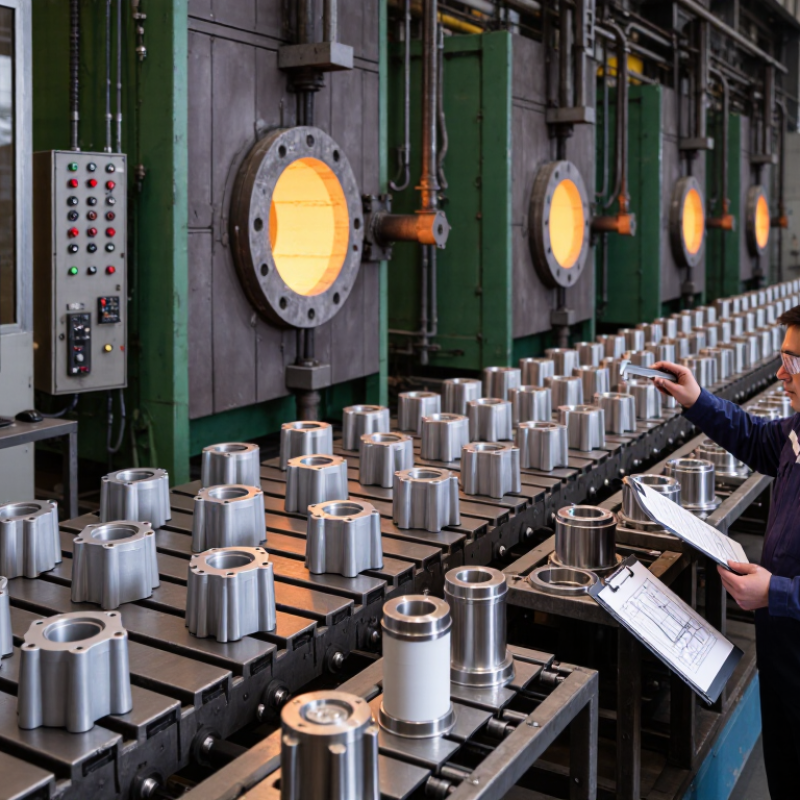
Before contacting a gravity casting supplier, turn your part drawing into a practical production brief. Specify the alloy, critical dimensions, tolerances, wall thickness, surface finish, and any machining required. Mark features that affect fit or sealing, such as a bore diameter or gasket face. Small details matter. A vague “good finish” can mean different things to different teams.

Set realistic production goals, too. Share your expected annual volume, batch size, delivery schedule, and likely demand changes. A part needed in hundreds may call for different tooling and planning than one ordered by the tens of thousands. Ask how the supplier handles sample approval, dimensional checks, and process changes between runs. For example, agree on which dimensions will be measured and how results will be recorded. That is not always obvious.

Consider the part’s real working conditions, not just its shape. Temperature, load, vibration, and exposure to moisture can affect alloy choice and inspection needs. If the design is not final, say so; changes after tooling begins can add cost and delay. Compare quotations against the same drawing, requirements, and forecast, rather than price alone. It is tempting to demand tight tolerances everywhere, but that can increase machining and inspection without improving function. Review those limits with an engineer, and keep the requirements tied to how the part will actually be used.
Assess the Supplier’s Gravity Casting Capabilities

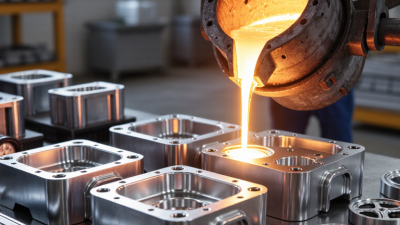
A capable gravity casting supplier should explain how its process fits your part, not just list available machines. Ask which alloys it pours and what part sizes, wall thicknesses, and shapes it handles reliably. Details matter. A supplier should also describe how it designs and maintains permanent molds, controls melt temperature, and manages pouring. These choices affect filling, shrinkage, surface finish, and dimensional consistency.

Look for practical evidence. Request sample inspection reports, material records, and measurements from more than one production run. Ask how the supplier checks critical dimensions and responds to porosity or incomplete filling. If heat treatment or machining is required, confirm who performs it and how finished parts are verified. A technically polished presentation is useful, but it cannot replace process data.

Discuss your drawing and expected order volume with the engineering team. Their questions can reveal whether they understand draft, parting lines, machining allowance, and realistic tolerances. I would not treat one attractive sample as proof; it may hide variation. A trial run is more telling. Ask what changes if the mold wears or demand rises, and listen for specific limits rather than confident promises. Some uncertainty is normal, but vague answers about repeatability deserve a second look.

How to Choose a Gravity Casting Supplier? - Assess the Supplier’s Gravity Casting Capabilities

Assessment Dimension What to Evaluate Evidence to Request Practical Evaluation
Part and alloy experience Experience with the proposed alloy family, part geometry, wall sections, and functional requirements. Common gravity-cast alloys include aluminum and copper-based alloys. Examples of comparable parts, alloy specifications, process descriptions, and relevant material test reports. Confirm that the supplier can explain how alloy choice and casting design affect strength, corrosion resistance, machinability, and finished-part performance.
Part size and casting capacity Maximum and minimum casting dimensions, weight range, mold capacity, and available handling equipment. Equipment list, process limits, and examples of castings within the required size and weight range. Compare the stated limits with the part drawing and expected production volume; ask how capacity is managed during peak demand.
Tooling and mold design Ability to design or manufacture permanent molds, evaluate parting lines, provide draft, and account for shrinkage and machining stock. Tooling design review process, mold maintenance plan, and a sample design-for-manufacturing review. Ask the supplier to identify likely casting risks on the drawing before tooling is approved, and to document agreed design changes.
Process control Control of melt preparation, metal temperature, mold temperature, pouring practice, cooling, and operator procedures. Process control plan, work instructions, monitoring records, and procedures for handling out-of-control conditions. Check that critical parameters are defined, recorded, and linked to corrective actions rather than relying only on operator experience.
Defect prevention and inspection Methods for preventing and detecting issues such as porosity, shrinkage, inclusions, cold shuts, and dimensional variation. Inspection plan, defect criteria, sample inspection records, and details of any applicable non-destructive testing. Verify that inspection methods match the part’s risk and specification. X-ray or other non-destructive testing should be agreed where required, not assumed as standard.
Dimensional capability Ability to meet drawing tolerances on as-cast and machined features, including datum strategy and measurement access. Inspection reports, measurement equipment list, calibration records, and a proposed measurement plan. Review critical dimensions and tolerances with the supplier; distinguish casting tolerances from machining tolerances in the quotation and control plan.
Machining and finishing Availability and control of machining, deburring, surface treatment, and other specified secondary operations. Process flow, machining capability details, finishing specifications, and sample reports for completed parts. Confirm how casting datums are transferred to machining and how the supplier protects finished surfaces during handling and shipment.
Material traceability Ability to trace raw material and production batches through casting, inspection, and shipment. Material certificates where specified, batch identification procedures, and an example of a traceability record. Request a sample traceability exercise showing how a shipped part can be linked to its production and inspection records.
Quality system and corrective action Documented quality controls, nonconformance handling, root-cause analysis, and effectiveness checks. Quality-system scope, audit information, sample corrective-action report, and change-control procedures. Assess whether corrective actions address causes and prevent recurrence; verify that process or tooling changes are communicated and approved.
Production readiness and delivery Capacity planning, lead-time assumptions, tooling readiness, raw-material supply, packaging, and contingency planning. Proposed production schedule, capacity plan, packaging specification, and escalation process for delays or shortages. Check that quoted lead times include tooling, sampling, approval, production, and shipping, and that delivery commitments are supported by a realistic plan.

Tip: Use the same drawing, specification, and quality requirements when comparing suppliers, and verify capability through documented evidence and representative sample parts.

Review Materials, Quality Controls, and Certifications

How to Choose a Gravity Casting Supplier? Review materials, quality controls, and certifications before comparing prices. Ask which alloys the supplier pours and how each alloy’s chemistry is checked. For aluminum parts, request recent test records and confirm the alloy matches your drawing. Look for controls at several stages: melt preparation, mold temperature, casting inspection, and final machining. Ask how inspectors detect porosity, cracks, and dimensional drift. A sample report should show actual measurements, not just a pass mark. That matters.

Tips: Request a sample inspection report and a traceability example. Check whether each record links a casting to its production batch. Verify that any certifications are current and cover the specific facility and processes you need. A certificate alone proves little about day-to-day consistency.

Discuss acceptance limits before ordering. Ask how the supplier handles out-of-spec parts, rework, and recurring defects. If possible, review a first-article casting against your drawing, including critical dimensions and surface areas. Observe how measurement tools are calibrated and whether inspection results are retained. A polished audit report is reassuring, but it can still miss a rushed shift change. Ask operators how checks work on an ordinary production day. Their answers may reveal gaps—or practical controls that paperwork does not show.

Verify Experience, Capacity, and Delivery Reliability

How to Choose a Gravity Casting Supplier?

Ask for evidence, not just a capability deck. Request examples of comparable parts, including alloy, casting weight, tooling size, and annual volume. Check sample inspection records for dimensions, porosity checks, and corrective actions. A polished audit can still miss a real bottleneck. Ask which machines, furnaces, and finishing processes are available, then compare their limits with your part’s requirements.

Capacity is more than machine count. Ask about current utilization, shift patterns, tooling lead times, and outsourced machining. The ISM Manufacturing PMI Report on Business tracks supplier deliveries with a diffusion index: readings above 50 indicate slower deliveries. It is a market signal, not proof of one supplier’s performance. Request at least six months of on-time delivery records and ask how the supplier handles late tooling or quality holds. Look closely.

Tips: Ask for on-time-in-full results and lead-time variation by month. Visit the production area, if practical, and watch a real job move from melt to inspection. Confirm who owns schedule updates. A small trial order can reveal gaps, though it cannot prove peak-season capacity. I would treat promises without dated records cautiously.

Compare Costs, Communication, and Ongoing Support

A gravity casting quote should separate tooling, alloy, machining, inspection, packaging, and freight. Compare the full delivered cost, not only the price per casting. Ask how the supplier prices scrap, tooling changes, and a second sample run. Deloitte’s 2023 Global Chief Procurement Officer Survey identified cost reduction as a leading procurement priority for roughly seven in ten respondents. That pressure can make the lowest quote tempting. It may also hide assumptions about inspection or process yield. Small details matter.

Communication is easier to judge with a real production question. Ask the supplier to explain how it would respond to porosity found near a machined surface. Look for a clear owner, a promised response time, and useful records, such as sample measurements and corrective-action notes. McKinsey’s 2020 global supply-chain survey found that 93% of respondents planned to make their supply chains more resilient. Responsive suppliers are part of that effort, especially when schedules or material availability shift. Ask for evidence.

Ongoing support should cover more than the first approved batch. Confirm who reviews tool wear, maintains process settings, and helps investigate dimensional drift after several production runs. Request a support plan with named roles and realistic response windows. I would still verify those promises during a trial order; a polished presentation is not proof of dependable service. A short review after the first run can reveal gaps in documentation, communication, or handoff before they affect larger orders.