Top Metal Casting Equipment Tips for Global Buyers?
In today’s competitive market, choosing the right Metal Casting Equipment is crucial for success. Global buyers must navigate a complex landscape of options and suppliers. The equipment you select can greatly influence production efficiency, product quality, and ultimately your bottom line.
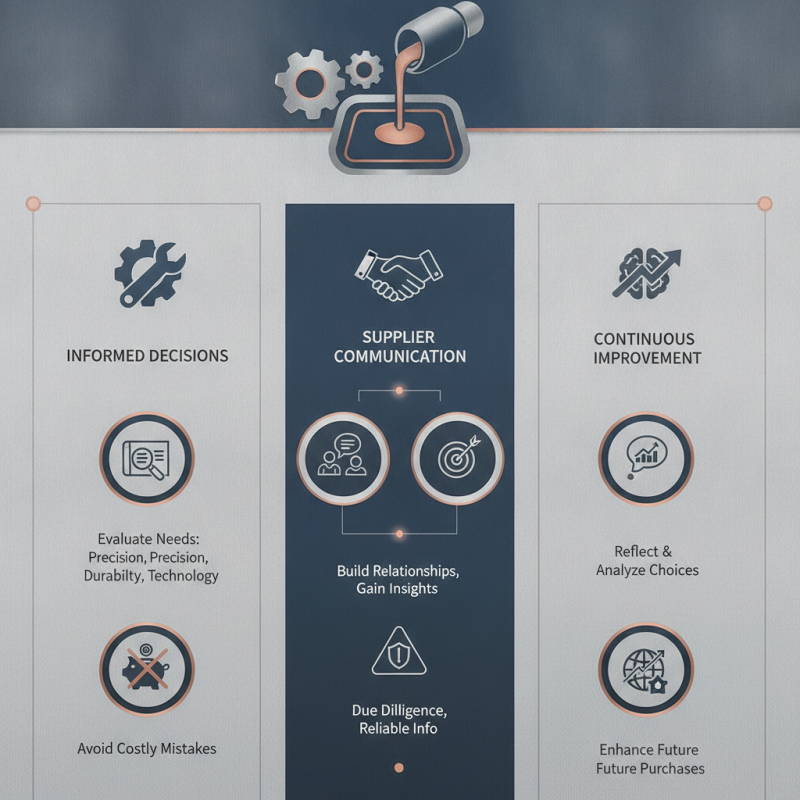
Purchasing decisions should be informed. Understanding the specifications and capabilities of metal casting equipment is essential. Many buyers overlook key factors that lead to costly mistakes. Evaluating equipment based on your specific needs is critical. For instance, consider factors like precision, durability, and the technology used in the casting process.
Moreover, communication with suppliers is vital. Establishing a strong relationship can yield valuable insights and support. Sharing your production goals will help ensure that you select the most suitable equipment. However, not all suppliers provide reliable information, so due diligence is necessary. Regularly reflecting on your choices and their impacts can enhance future purchasing decisions in the metal casting arena.
Top Considerations for Selecting Metal Casting Equipment for Quality Output
When selecting metal casting equipment, quality output hinges on several critical considerations. The type of metal to be cast plays a significant role. For instance, aluminum requires different equipment compared to heavier metals like bronze or iron. A recent industry report indicates that the global metal casting market is projected to reach $210 billion by 2026, emphasizing the necessity for efficient and reliable equipment.
Inspecting the machinery’s capacity and compatibility with your operations can’t be overlooked. Equipment that doesn’t align with specific production needs may lead to defects and increased waste. The American Foundry Society recommends evaluating the equipment’s energy efficiency. Studies show that energy-efficient machines can reduce operational costs by up to 35%.
Consider maintenance practices too. Equipment requiring frequent servicing can disrupt production. According to industry data, 15% of downtime in manufacturing is due to unexpected equipment failures. This figure highlights the need for durable machines. Reliable suppliers provide equipment warranties and after-sale support to alleviate potential risks. Always verify equipment specifications and performance history from various sources before making a decision. These proactive steps can contribute significantly to achieving high-quality output.
Understanding Different Types of Metal Casting Equipment Available in the Market
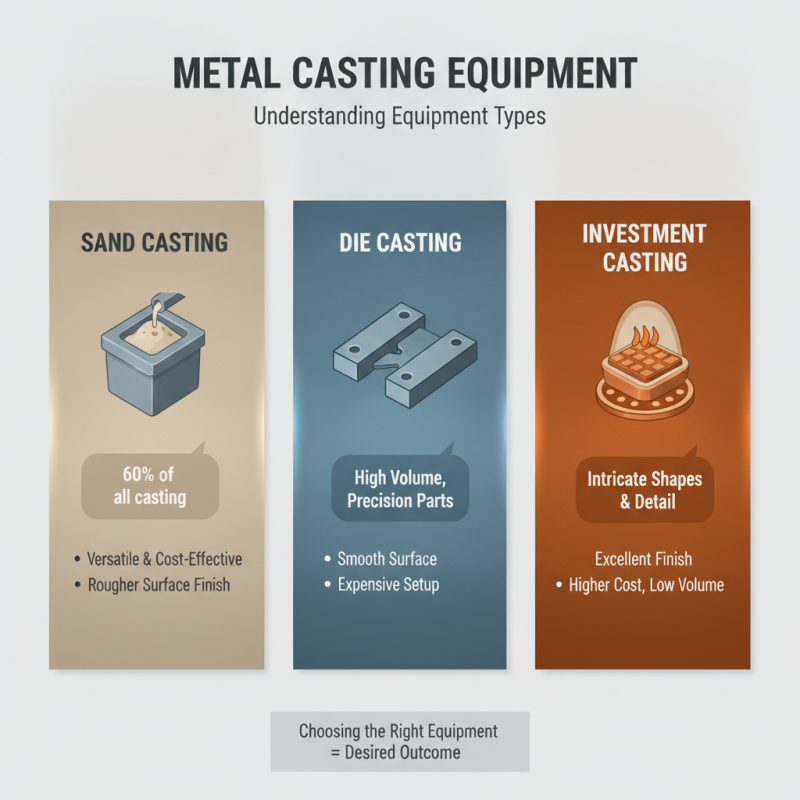
Metal casting encompasses various methods, each requiring specific equipment tailored to the desired outcome. Key types include sand casting, die casting, and investment casting. Sand casting is popular for its versatility. According to industry data, it accounts for roughly 60% of all casting processes due to its adaptability and cost-effectiveness. However, it may not always produce the surface finish that some applications demand.
Die casting is favored for its speed and precision. Reports indicate this method is projected to grow at a CAGR of 7% from 2023 to 2028. While it offers high dimensional accuracy, it has limitations, particularly in material types and thicknesses. The equipment required for die casting often involves high startup costs, which can deter some buyers.
Investment casting, though more costly, provides intricate designs with excellent surface quality. The market for this equipment is steadily increasing, driven by the rise in aerospace and automotive sectors. However, the process can be complex and may not suit all projects. Understanding these dynamics is crucial for buyers to make informed decisions.
Evaluating the Cost-Effectiveness of Metal Casting Equipment Investments
Investing in metal casting equipment can be daunting for global buyers. Evaluating the cost-effectiveness of these investments requires careful consideration. According to a recent report by Smithers Pira, the global market for casting equipment is anticipated to reach $36 billion by 2025. This suggests a growing demand for efficient and reliable machinery. However, not all investments yield the same return.
Buyers should conduct a thorough analysis of operational costs. The upfront expense is only part of the equation. Maintenance costs, energy consumption, and operational efficiency play crucial roles. A study by MarketsandMarkets indicates that energy costs can account for nearly 30% of total operational expenditure in foundries. Therefore, choosing machines that utilize advanced technology can mitigate these costs over time.
It is also critical to assess the longevity and durability of casting equipment. Cheap, low-quality equipment may seem appealing initially, but frequent breakdowns can lead to higher long-term expenses. The potential downtime can affect production timelines and result in lost revenue. Inadequate equipment often requires unexpected repairs, complicating the financial picture. Buyers should reflect on their specific needs and consider the long-term implications of their choices.
Latest Technological Innovations in Metal Casting Equipment: A Global Overview
The landscape of metal casting equipment is evolving rapidly. Advances in 3D printing, robotics, and automation are transforming traditional processes. These innovations not only enhance efficiency but also improve precision. An emphasis on sustainability is evident, with greener materials being integrated into production.
For global buyers, staying updated is crucial. Consider the production capabilities and reliability of equipment. Engage with manufacturers about their technological advancements. Review case studies to understand real-world applications. Testing equipment before purchasing can prevent costly failures.
Observing industry trends can yield valuable insights. New techniques, such as additive manufacturing, streamline workflows. However, some equipment may require a steep learning curve. Be prepared for initial setbacks. Observing how other manufacturers adapt can offer practical lessons. Investing in training for staff is essential for maximizing new technologies.
Top Metal Casting Equipment Innovations
This chart represents the latest technological innovations in metal casting equipment based on various parameters such as efficiency, cost-effectiveness, and environmental impact.

 +86-13516964051


 CONTACT NUMBER
 CONTACT NUMBER