 +86-13516964051


Leave Your Message
-
CONTACT NUMBER
-
 CONTACT NUMBER
-
 CONTACT NUMBER
Choosing the top Sand Aluminium manufacturers requires more than comparing prices or browsing polished product pages. Global buyers need evidence from the foundry floor, not only marketing claims. Reliable suppliers should demonstrate alloy control, mould preparation, dimensional accuracy, surface finish, and repeatable delivery performance.
Casting authority John Campbell states, “The quality of a casting is determined by the quality of the metal entering the mould.” This principle matters when evaluating Sand Aluminium producers. Buyers should request melt analysis reports, heat numbers, inspection records, and samples from recent production batches. A serious manufacturer can explain how it controls hydrogen, inclusions, shrinkage, and porosity. It should also discuss tooling life and repair procedures clearly.
Look closely.
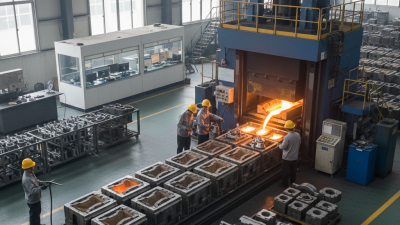
A factory visit can reveal practical details. Observe labelled ingots, protected sand storage, calibrated spectrometers, and clean pouring areas. Ask whether testing is performed internally or through an independent laboratory. Certifications help, but certificates alone do not prove stable production. Customer references, transparent lead times, and documented corrective actions offer stronger evidence.
This guide compares leading Sand Aluminium manufacturers through technical capability, export experience, quality systems, sustainability practices, and buyer support. It also considers communication during design changes, because small misunderstandings can create expensive casting defects. Recycled aluminium may reduce environmental impact, yet its composition must remain controlled. That point is sometimes overlooked.
No ranking is permanently perfect. Supplier performance can change with management, equipment, raw material access, or regional logistics. Therefore, buyers should validate current capabilities before signing a contract. The strongest choice is not always the largest producer. It is the manufacturer that provides consistent evidence, explains limitations honestly, and delivers castings that perform reliably in real applications.
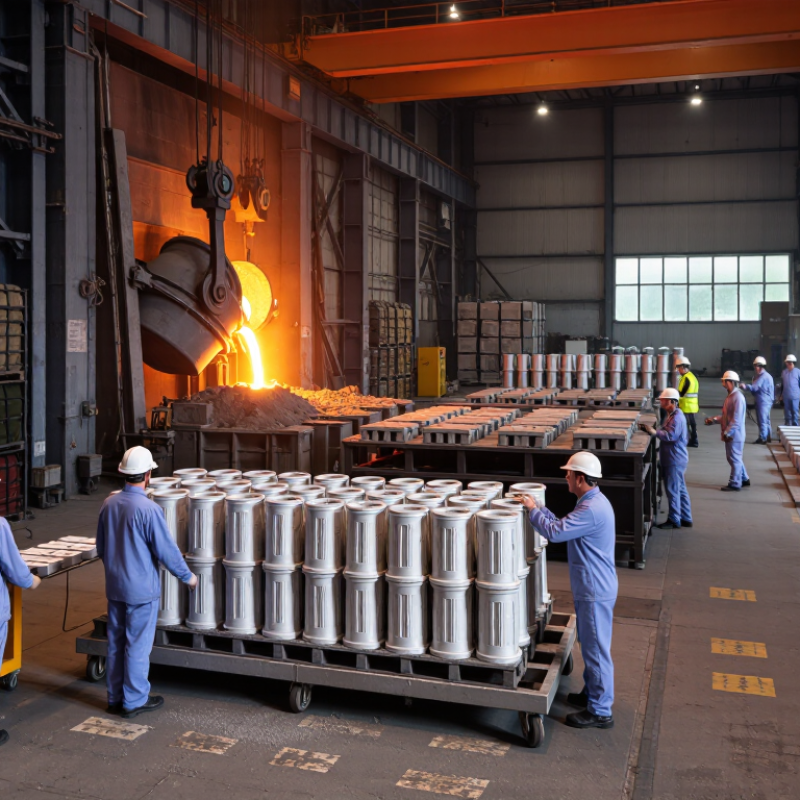
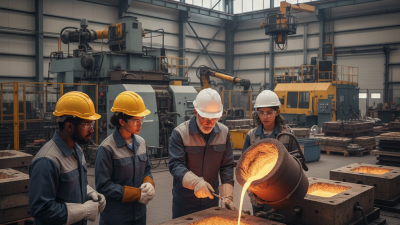
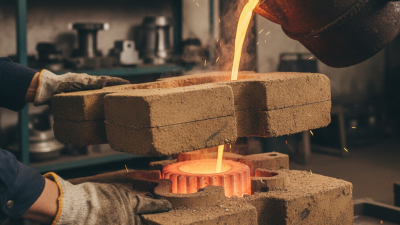
Sand-cast aluminium is molten alloy poured into a prepared sand mould. After cooling, the mould is broken away, revealing a near-net-shape component. This method supports complex cavities, thick sections, and internal passages using sand cores. It also requires relatively simple tooling, making production practical for prototypes, replacement parts, and medium-volume orders.
The process is not flawless. Raw castings may show visible texture, machining allowances, or minor dimensional variation. A buyer expecting a mirror finish could be disappointed. However, experienced manufacturers manage these limits through alloy selection, controlled pouring temperatures, X-ray inspection, and documented heat treatment. The USGS Mineral Commodity Summaries 2024 reported approximately 70 million metric tons of global primary aluminium production in 2023. That scale supports broad alloy availability and a mature international supply chain.
Sustainability also influences sourcing decisions. The International Aluminium Institute reports that recycling aluminium uses about 5% of the energy required for primary production. Buyers should therefore request recycled-content declarations, energy records, and traceability documents. They should also verify porosity limits, tensile-test results, surface standards, and dimensional inspection methods. Supplier comparisons often focus too heavily on unit price. That is a mistake. A cheaper casting may create higher machining, repair, or rejection costs. Each drawing deserves a process review.
| Data Dimension | Verified Technical Information | Typical Buyer Requirement or Selection Point | Relevant Standard or Technical Basis |
|---|---|---|---|
| Process Definition | Sand casting forms aluminium components by pouring molten aluminium into a mould made from bonded sand. The mould is normally broken after solidification and cannot be reused for the next part. | Suitable for prototypes, replacement parts, complex geometries, large components, and low-to-medium production volumes. | General foundry practice; process terminology is covered by international casting standards. |
| Common Aluminium Alloys | Frequently used cast alloys include A356.0, A357.0, 319.0, 535.0 and 514.0. A356.0 is widely selected where a balance of strength, castability and corrosion resistance is required. | Request the exact alloy designation, chemical composition limits and applicable temper condition before quotation. | ASTM B26/B26M and relevant national or regional alloy specifications. |
| Typical Alloy Characteristics | A356-type aluminium commonly contains approximately 6.5–7.5% silicon and 0.25–0.45% magnesium, depending on the applicable specification. | Silicon improves fluidity and castability; magnesium enables heat treatment and increases strength after suitable processing. | Alloy chemistry should be confirmed against the agreed material specification and certificate. |
| Mechanical Properties | For A356-T6 sand castings, typical minimum values may include tensile strength around 220 MPa and yield strength around 165 MPa, depending on the governing specification, section size and heat treatment quality. | Use certified mechanical-test results for qualification. Do not compare values from different alloys or tempers without checking the test standard. | ASTM material specifications and ASTM E8/E8M tensile-testing methods. |
| Dimensional Tolerance | As-cast dimensions commonly require broader tolerances than die casting or precision machining. A typical sand-casting tolerance may fall near CT8–CT12, depending on size, geometry and process control. | Define critical dimensions, datum references, machining allowances and inspection methods on the drawing. | ISO 8062-3 casting dimensional and geometrical tolerance system. |
| Surface Finish | Untreated sand-cast aluminium generally has a rougher surface than permanent-mould or die-cast aluminium. Surface roughness varies with sand type, binder system, mould quality and cleaning method. | Specify whether the part requires shot blasting, tumbling, vibratory finishing, grinding, machining, anodizing or coating. | Surface-finish requirements should be stated using the buyer’s drawing or an agreed roughness specification. |
| Typical Wall Thickness | Many aluminium sand castings are designed with wall sections of approximately 3–6 mm or more. The practical minimum depends on alloy fluidity, casting size, mould design and filling conditions. | Use uniform wall sections where possible and avoid abrupt thickness changes to reduce shrinkage and distortion risk. | Final design should be validated through foundry process simulation or sample casting trials. |
| Maximum Part Size | Sand casting can accommodate components considerably larger than many high-pressure die-casting processes. The practical limit is controlled by flask size, handling equipment, furnace capacity and pattern design. | Provide overall dimensions, estimated weight, lifting points and shipment constraints during supplier evaluation. | Capacity is facility-specific and should be verified through an equipment and process-capability review. |
| Internal Cavities | Complex internal passages can be produced with sand cores. Core design may affect dimensional accuracy, gas porosity, cleaning access and machining requirements. | Specify core prints, core-support requirements, leak-testing pressure and acceptable internal discontinuities. | Use drawing-based acceptance criteria and agreed non-destructive testing procedures. |
| Porosity Control | Potential casting defects include gas porosity, shrinkage porosity, inclusions, cold shuts, misruns and hot tears. Control methods include melt filtration, degassing, riser design and controlled pouring. | For pressure-containing or fatigue-critical parts, require an agreed defect-acceptance level and inspection plan before production. | Radiographic, ultrasonic, dye-penetrant or visual inspection may be selected according to component risk. |
| Heat Treatment | Solution treatment, quenching and artificial aging can increase the strength of heat-treatable alloys such as A356 and A357. Non-heat-treatable alloys require different performance strategies. | State the required temper, heat-treatment cycle, hardness range and certificate requirements in the purchase specification. | Applicable alloy specifications and approved heat-treatment procedures. |
| Leak Testing | For housings, manifolds and other fluid-handling castings, pressure or vacuum testing can identify through-wall leakage. Test pressure, duration and allowable leakage must be defined in advance. | Include the fluid, pressure, temperature, test medium, holding time and pass/fail limit in the technical agreement. | Project-specific testing procedure or applicable industry standard. |
| Machining Allowance | Machining allowance is added to surfaces requiring accurate dimensions or improved finish. The required allowance depends on casting size, tolerance, distortion risk and machining process. | Mark machining surfaces clearly and identify finished dimensions separately from as-cast dimensions. | Allowance should be agreed through the casting drawing and manufacturing review. |
| Inspection Documentation | A global buyer may request material certificates, chemical analysis, tensile results, hardness records, dimensional reports, visual inspection records and non-destructive test reports. | Use a purchase-order quality plan defining sampling frequency, traceability, calibration and document format. | Inspection requirements should follow the drawing, contract and agreed quality-management procedures. |
| Production Volume Fit | Sand casting usually has lower tooling cost than permanent mould or die casting, but mould preparation is more labour-intensive and cycle times are generally longer. | Often economical for prototypes, engineered-to-order components, service parts and low-to-medium annual volumes. | Actual economics depend on tooling complexity, alloy, part weight, finishing and annual demand. |
| Why Global Buyers Choose It | Key advantages include flexible tooling, broad alloy availability, large-part capability, complex core-supported geometries and relatively low initial tooling investment. | Best suited when design flexibility and development cost are more important than the fastest cycle time or the smoothest as-cast surface. | A process comparison should also consider permanent-mould casting, die casting, investment casting and machining from solid. |
| Supplier Qualification | Important evaluation factors include foundry equipment, alloy-control capability, pattern and core-making resources, heat-treatment capacity, inspection systems, traceability and export packaging. | Request process-flow documentation, sample inspection data, equipment capability, corrective-action history and production references without relying only on quoted price. | Supplier assessment should be based on the buyer’s technical, quality, regulatory and logistics requirements. |