Best Aluminum Cast Parts Suppliers in 2026
Choosing the best Aluminum Cast Parts suppliers in 2026 takes more than comparing quotes. Buyers need to understand how a supplier controls alloy quality, tooling, process consistency, and inspection. A low unit price can look attractive, until porosity or dimensional variation appears in production. Small details matter: a clear inspection report, traceable material records, and a supplier willing to discuss a rejected sample.
Casting researcher John Campbell is widely associated with this principle: “The quality of a casting is determined by the quality of the metal from which it is made.” It is a useful reminder, not a complete supplier scorecard. Good metal still needs sound process control, suitable tooling, and careful verification. Ask how the supplier monitors melt chemistry, manages defects, and checks critical dimensions. Request evidence relevant to your part, rather than relying on broad capability claims.
There is no perfect supplier. And no perfect checklist. A supplier suited to a high-volume automotive program may not fit a short-run industrial project. This guide compares manufacturers through practical criteria, including technical capability, quality systems, communication, lead times, and support after delivery. It also encourages buyers to verify claims directly and assess samples against their own specifications. The comparison has limits: public information cannot reveal every shop-floor practice, and one strong reference does not guarantee consistent results. Use the shortlist as a starting point, then ask focused questions before committing to production.
Understanding Aluminum Casting and Its Industrial Applications
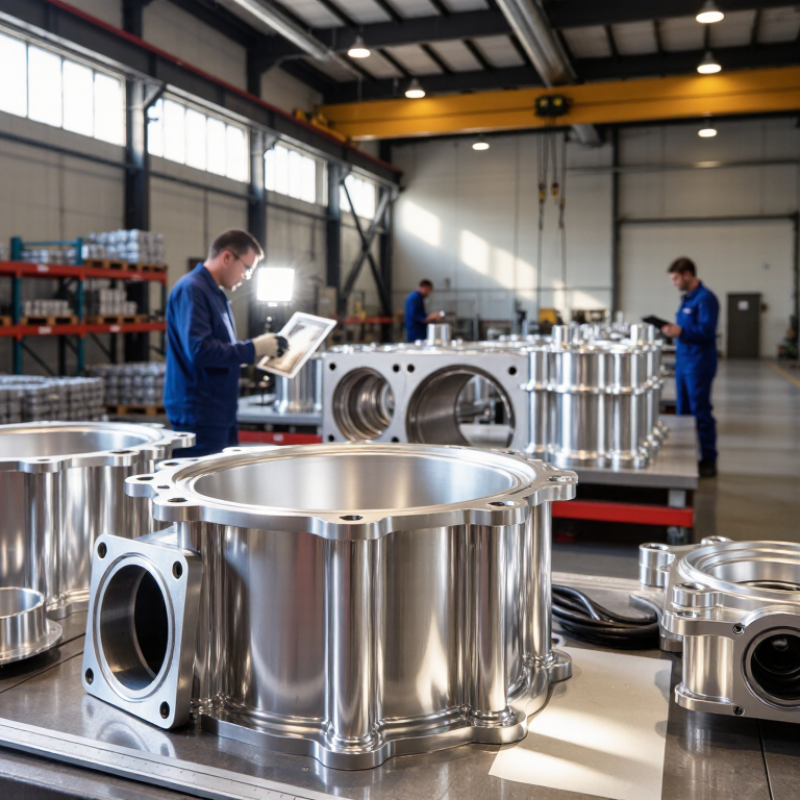
Aluminum casting shapes molten alloy inside a mold, producing parts that can be complex, lightweight, and suitable for repeat production. The right method depends on geometry, volume, strength, and surface requirements. Sand casting accommodates larger, less uniform parts, such as pump housings. Permanent-mold casting often provides a smoother finish and consistent dimensions. High-pressure die casting suits high-volume components with thin walls and detailed features. No process fits every part.
These methods support applications in vehicles, industrial machinery, electrical equipment, and building systems. A motor housing may need to dissipate heat, while a valve body must maintain reliable sealing surfaces. Small details matter. Wall thickness, alloy selection, and cooling paths can affect shrinkage, porosity, and machining needs. A component may look sound yet contain internal defects, so inspection should match its service conditions. Dimensional checks, pressure testing, or material tests may be appropriate. When evaluating suppliers, review their process controls, inspection records, and ability to work from clear drawings. A low quoted price can be tempting, but tooling changes and rejected parts may cost more later. Even careful designs sometimes need revision after casting trials.
Best Aluminum Cast Parts Suppliers in 2026 — Understanding Aluminum Casting and Its Industrial Applications
| Casting Process |
How It Works |
Common Aluminum Alloys |
Typical Production Fit |
Industrial Applications |
Key Considerations |
| High-pressure die casting |
Molten aluminum is injected under pressure into a reusable steel die, allowing rapid production of repeatable parts. |
A380, A383, and ADC12 |
High-volume production of small to medium-sized components |
Automotive housings, appliance components, electronics enclosures, and industrial equipment parts |
Offers good dimensional consistency and production speed. Tooling investment is substantial, and part geometry must suit die filling and ejection. |
| Sand casting |
Molten metal is poured into a mold formed from bonded sand; the mold is broken to remove the casting. |
A356, 319, and 356 |
Low-to-medium production volumes, prototypes, and large castings |
Pump and valve bodies, machinery housings, agricultural equipment, and large structural components |
Accommodates complex shapes and a wide range of part sizes. Surface finish and dimensional consistency are generally less refined than in die casting. |
| Permanent mold casting |
Molten aluminum is poured or introduced at relatively low pressure into a reusable metal mold. |
A356, 356, and 319 |
Medium-volume production of parts with repeatable geometry |
Automotive wheels and suspension components, motor housings, and equipment parts |
Reusable molds can provide better repeatability and surface finish than sand molds. Shape complexity and tooling cost should be assessed during design. |
| Low-pressure die casting |
Controlled gas pressure pushes molten aluminum upward from a sealed furnace into a reusable die. |
A356 and other heat-treatable Al-Si-Mg alloys |
Medium-to-high production volumes where controlled filling is valuable |
Automotive wheels, chassis components, and other parts requiring consistent metal flow |
Controlled filling can reduce turbulence and support sound castings. Equipment and tooling requirements are more specialized than for sand casting. |
| Investment casting |
A disposable wax pattern is coated with ceramic; the wax is removed before molten metal is poured into the ceramic shell. |
Selected aluminum-silicon casting alloys, including A356 |
Small-to-medium runs of intricate parts |
Precision equipment components, aerospace-related hardware, and complex industrial parts |
Can reproduce intricate features and reduce machining needs. The process is generally slower and more costly per part than high-volume die casting. |
Process suitability, alloy selection, achievable tolerances, and mechanical properties depend on part geometry, tooling, heat treatment, and the supplier’s quality controls. Confirm requirements against the applicable alloy specification and casting standard.
How Aluminum Cast Parts Are Manufactured
How Aluminum Cast Parts Are Manufactured
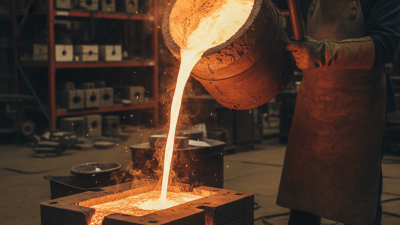
Aluminum cast parts begin with an alloy selected for strength, corrosion resistance, and service temperature. The metal is melted in a controlled furnace, then checked for chemistry and cleanliness. Operators pour it into a prepared mold, or inject it under pressure into a steel die. Sand casting suits larger, lower-volume shapes; die casting can produce detailed parts at higher volumes. Cooling rate matters. A thick boss may solidify later than a thin wall, creating shrinkage or internal porosity if the design and feeding system are not managed carefully.
After solidification, workers remove gates and flash, then machine critical faces and holes. Inspection may include dimensional checks, visual examination, and X-ray testing for hidden voids. The International Aluminium Institute reports that about 75% of all aluminium ever produced remains in use. Recycled metal can support casting supply, but its alloy composition must be verified before melting. A clean-looking surface is not proof of sound internal quality. That is easy to miss.
Tips: Ask suppliers which casting process fits your part’s volume and geometry. Request alloy certificates and inspection records, and review sample parts before approving production. Then check how results are tracked between batches. Small gaps in documentation matter.
Criteria for Evaluating Aluminum Casting Suppliers in 2026
A capable aluminum casting supplier should prove control of the process, not just show polished sample parts. Ask for alloy certificates, melt chemistry records, and inspection results from production runs. For pressure-die castings, review porosity data and dimensional checks on features such as thin walls, threaded bosses, and sealing faces. For sand or permanent-mold parts, examine how the supplier controls shrinkage, inclusions, and machining allowance. A sample can look excellent. Production is the real test.
Capacity and traceability matter, too. Request a clear route from incoming metal to finished part, including lot identification, furnace records, and nonconformance handling. The International Aluminium Institute reports that recycling aluminum can use up to 95% less energy than producing primary aluminum. That makes documented recycled-content controls useful when sustainability matters, but recycled feedstock still needs reliable chemistry checks. Ask how the supplier prevents alloy mix-ups and verifies each melt. A certificate alone may not answer that.
Compare suppliers using the same drawing, tolerance requirements, annual volume, and delivery schedule. Review their measurement equipment, calibration records, and ability to share first-article and ongoing inspection reports. Visit the production floor if possible; look for orderly material flow and maintained tooling, not only impressive machinery. No scorecard is perfect. I would also leave room for a practical question: when a casting fails, how quickly does the supplier explain the cause—and show evidence that the fix worked?
Best Aluminum Cast Parts Suppliers in 2026: Evaluation Criteria
A practical weighted framework for comparing aluminum casting suppliers. The percentages are suggested evaluation weights, not supplier-specific results; adjust them to fit your project requirements.
Prioritize quality and technical capability, then assess delivery reliability, total cost, production capacity, and environmental and regulatory compliance.
Leading Aluminum Cast Parts Suppliers and Their Capabilities
Best Aluminum Cast Parts Suppliers in 2026
Leading suppliers distinguish themselves through process control, engineering support, and dependable inspection—not simply low quotes. Look for experience with your required casting method, such as high-pressure die casting, gravity casting, or sand casting. Ask how suppliers manage alloy chemistry, porosity, wall thickness, and machining allowance. These details matter when a part has thin ribs, threaded holes, or sealing surfaces. The USGS Mineral Commodity Summaries 2025 estimates global primary aluminum production at about 72 million metric tons in 2024. This is not a casting-supplier ranking, but it shows the scale of the material supply chain behind component production.
Strong suppliers can review drawings, recommend design changes, and provide sample parts before full production. Their capabilities may include tooling design, X-ray or other defect checks, dimensional inspection, and secondary machining. Request inspection records and clarify which features are measured on every part. A glossy sample can still conceal inconsistent internal quality. I have seen teams focus heavily on cycle time and leave inspection requirements vague; that gap is easy to miss.
Tips: Send a 3D model, alloy specification, annual volume, and critical dimensions when requesting a quote. Ask for a sample inspection report and a clear explanation of the supplier’s process limits. Compare the evidence, not just the promised tolerance.
How to Select a Supplier for Your Project’s Requirements
Choosing an aluminum casting supplier starts with the part, not a general promise of quality. Define the alloy, annual volume, load, operating temperature, surface finish, and critical dimensions before comparing quotations. A bracket exposed to vibration may need different testing from a decorative housing.
Small details matter. Ask which casting route fits the geometry—die, sand, or permanent mold—and why. Request process limits for wall thickness, porosity, machining allowance, and achievable tolerances. A tolerance listed on a quote does not prove it will hold across a production run.
Review evidence from similar parts: inspection plans, sample reports, material certificates, and records of corrective actions. Check how the supplier controls melt chemistry, tooling changes, and dimensional checks after machining. Ask for traceability. For safety-critical parts, agree on validation steps and acceptance criteria before tooling begins.
Visit the facility or request a live process review when practical; a polished presentation alone reveals little. Compare total cost, including tooling, scrap assumptions, packaging, lead time, and capacity during peak demand. Then test a representative sample in a real assembly.
Even careful audits have gaps. A first article may fit perfectly, while later batches drift, so define how variation is reported and contained. Don’t choose on price alone, but don’t assume the highest quote is safest either.

 +86-13516964051


 CONTACT NUMBER
 CONTACT NUMBER