Leave Your Message

China Best Aluminum Parts Manufacturer for Global Buyers

Choosing the China Best Aluminum Parts Manufacturer for Global Buyers requires more than comparing online prices. It requires evidence, engineering discipline, and honest communication. Aluminum Parts may look simple on a screen, yet a small tolerance error can affect assembly, sealing, weight, and service life.

As aluminum metallurgy expert J. Gilbert Kaufman wrote, “The properties of aluminum alloys depend on composition, processing, and heat treatment.” This principle remains practical today. A capable manufacturer should explain alloy selection, such as 6061-T6 for structural components or 5052 for formed parts. They should also provide drawings, inspection records, surface-finish samples, and traceable material certificates.

Details matter.

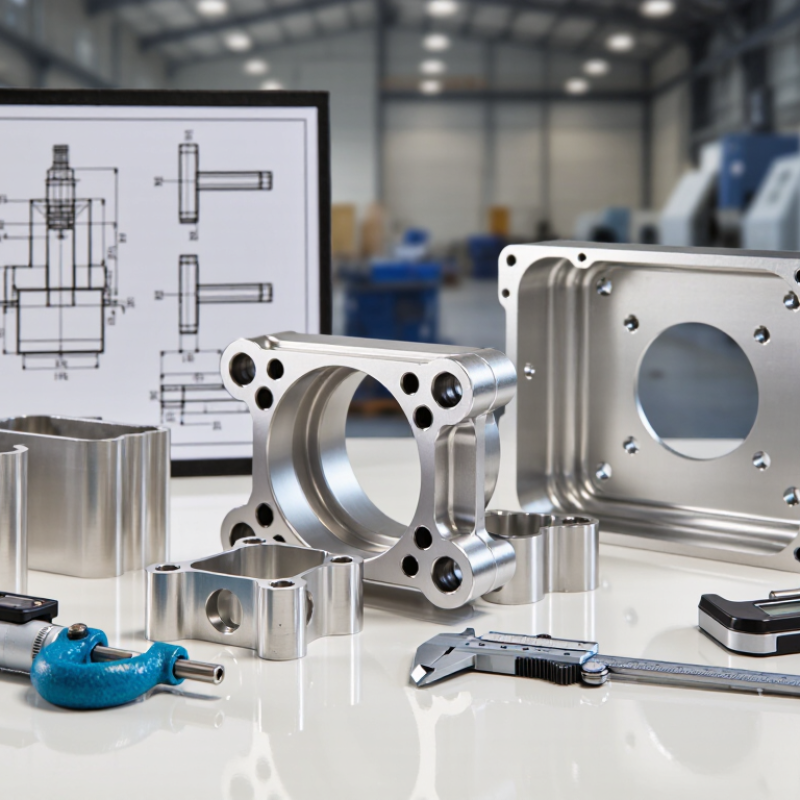
Experienced suppliers inspect dimensions with calibrated tools. They review burrs around drilled holes. They check anodized surfaces under consistent lighting. These actions reveal manufacturing experience better than polished factory photographs. Global buyers should also examine communication speed, packaging methods, sampling procedures, and production capacity.

No factory is flawless. That matters.

A reliable partner admits production risks before they become expensive problems. Perhaps a tolerance is too tight for economical machining. Perhaps a selected coating will not withstand outdoor exposure. Transparent engineers will raise these concerns and suggest alternatives.

China offers extensive machining, casting, extrusion, and finishing capabilities. However, capability varies widely between suppliers. The strongest manufacturer combines modern equipment with documented processes, skilled technicians, and responsive project management. This introduction examines how buyers can evaluate Aluminum Parts manufacturers through quality evidence, technical fit, consistency, and long-term reliability. Mistakes still happen. Careful verification reduces their impact.
China Best Aluminum Parts Manufacturer for Global Buyers

What Defines a Leading Aluminum Parts Manufacturer in China

A leading aluminum parts manufacturer in China is defined by more than low quotations. In supplier audits, I look for stable process control, clear engineering records, and honest communication. Experienced teams review alloy selection, wall thickness, machining tolerance, and surface requirements before production. They can explain why a drawing may fail in die casting or CNC machining. That practical explanation matters. It prevents expensive revisions after tooling begins. Reliable manufacturers also provide material certificates, inspection reports, and batch traceability. Measurements should include actual data, not only a stamped approval. A coordinate measuring machine report, photographed with the part, offers stronger evidence. Still, no factory is perfect. Even skilled teams can miss a burr or misread a tolerance. The real test is how quickly they investigate and correct it.

Tips: Request a sample part, process flow, and recent inspection record. Ask who approves engineering changes. Confirm packaging protects thin edges and machined threads during shipment. Check whether production samples match mass-production equipment. Keep communication written and specific. Small details expose large risks.

Professional capability also appears in early questions. A dependable supplier asks about loading, joining, corrosion exposure, and expected service life. It may recommend a different temper or finishing method, even when that reduces its immediate order value. That advice shows technical responsibility. Buyers should review factory experience with similar geometries, equipment capacity, quality training, and corrective-action records. Third-party audits can add confidence, but they do not replace direct sample evaluation. A polished website proves very little. Consistent dimensions, clean threads, controlled color, and punctual updates prove more.

China Best Aluminum Parts Manufacturer for Global Buyers

What Defines a Leading Aluminum Parts Manufacturer in China?

Material expertise is a key indicator of a capable aluminum parts manufacturer. The chart compares typical minimum ultimate tensile strength values for widely used aluminum alloys and tempers. A qualified supplier should select the correct alloy, temper, machining process, and inspection standard according to the part’s strength, weight, corrosion-resistance, and application requirements.

Values shown are typical minimum ultimate tensile strength figures in MPa based on commonly specified material conditions. Actual properties may vary by applicable international standard, product form, and heat treatment.

Aluminum Alloys and Part Types for Global Applications

For global buyers, aluminum selection starts with service conditions, not appearance. It starts with fit. 6061-T6 suits machined brackets, frames, housings, and structural supports. It balances strength, machinability, and corrosion resistance. 6063 works well for extruded profiles, rails, and visible trim. Its surface finishes evenly. 7075 provides higher strength for demanding components, but it costs more and machines less easily. Die-cast alloys support complex shapes and high-volume production. No alloy is perfect. That matters.

Part type should guide the manufacturing process. CNC machining creates precise holes, threads, pockets, and low-volume prototypes. Extrusion produces consistent channels, tubes, and long profiles. Die casting handles detailed shapes with repeated dimensions. Sheet aluminum fits covers, panels, and lightweight enclosures. In production reviews, we examine wall thickness, draft angles, bend radii, and tolerance requirements before confirming a design. A beautiful drawing can still fail during machining. Tolerance still matters.

Global applications also demand stable documentation. Material certificates, dimensional inspection reports, surface-finish records, and traceable batch information help buyers verify each shipment. For coastal equipment, anodizing or powder coating can improve surface protection. For heat-related parts, thermal performance may matter more than appearance. Packaging deserves attention too, especially when finished surfaces can scratch during long-distance transport. We still review every specification carefully, because a small assumption can create costly rework. Reliable aluminum manufacturing is not only about producing parts; it is about matching alloy, process, inspection, and application with discipline.

China Best Aluminum Parts Manufacturer for Global Buyers - Aluminum Alloys and Part Types for Global Applications

Aluminum Alloy / Series Representative Grades Key Material Characteristics Common Aluminum Part Types Typical Global Applications Suitable Manufacturing Processes Important Selection Considerations
1000 Series 1050, 1060, 1100 Commercially pure aluminum with very high electrical and thermal conductivity, excellent corrosion resistance, and excellent formability. Strength is relatively low.
  • Electrical busbars
  • Reflectors and panels
  • Sheet covers
  • Heat-transfer components
Electrical equipment, lighting systems, chemical equipment, food-processing equipment, heat exchangers, and general sheet-metal products. Sheet forming, stamping, bending, spinning, extrusion, CNC machining, and brazing. Select when conductivity, corrosion resistance, or formability is more important than high mechanical strength.
3000 Series 3003, 3004 Manganese-alloyed aluminum with good formability, good corrosion resistance, and moderate strength. Generally non-heat-treatable.
  • Heat-exchanger fins
  • Food and beverage containers
  • Roofing and wall panels
  • Light-duty brackets
HVAC systems, cookware, building products, packaging, storage tanks, and architectural sheet applications. Roll forming, deep drawing, stamping, bending, brazing, and light machining. A practical choice for formed parts requiring balanced corrosion resistance and moderate strength at controlled cost.
5000 Series 5052 Magnesium-alloyed aluminum with strong corrosion resistance, good fatigue performance, and excellent sheet-forming capability. It cannot be strengthened by heat treatment.
  • Enclosures
  • Control panels
  • Fuel and fluid tanks
  • Brackets and formed covers
Transportation equipment, marine structures, electronics enclosures, pressure vessels, architectural products, and general fabricated assemblies. Laser cutting, CNC machining, stamping, bending, spinning, TIG welding, and MIG welding. Well suited to exposed or formed sheet parts. Formability and strength may vary with temper, so the specified temper should be confirmed before production.
5000 Series 5083 High-strength, non-heat-treatable aluminum with very good seawater corrosion resistance and good weldability.
  • Marine plates
  • Welded frames
  • Structural panels
  • Heavy-duty tanks
Shipbuilding, offshore equipment, pressure vessels, transportation structures, cryogenic equipment, and heavy welded fabrications. Plate cutting, CNC machining, forming, TIG welding, MIG welding, and fabrication. Recommended for welded structures exposed to marine or corrosive environments. Welding can reduce the strength of heat-treatable alloys, but 5083 is commonly selected for its weldable non-heat-treatable properties.
6000 Series 6061-T6 Magnesium-silicon alloy with a strong combination of strength, corrosion resistance, machinability, and weldability. T6 temper provides high strength through heat treatment.
  • CNC-machined housings
  • Mounting plates
  • Frames and brackets
  • Structural profiles
Industrial machinery, automation equipment, transportation, renewable-energy systems, robotics, construction, and general engineering. CNC milling, CNC turning, extrusion, sawing, drilling, bending, TIG welding, and MIG welding. One of the most versatile choices for machined and structural parts. The heat-affected zone near welds may have lower strength than the original T6 material.
6000 Series 6063-T5 / 6063-T6 Excellent extrusion performance, smooth surface quality, good corrosion resistance, and moderate strength. Commonly used where appearance and profile complexity matter.
  • Aluminum profiles
  • Heat sinks
  • Frames and rails
  • Decorative trims
Architectural systems, LED lighting, solar-panel frames, furniture, display equipment, doors, windows, and modular machine frames. Extrusion, anodizing, powder coating, sawing, drilling, tapping, and light CNC machining. Select for complex extruded cross-sections, attractive surface finishes, and moderate structural requirements rather than maximum strength.
2000 Series 2024-T3 / 2024-T4 Copper-alloyed aluminum with high strength-to-weight performance and good fatigue resistance. Corrosion resistance and weldability are lower than those of many 6000-series alloys.
  • Precision plates
  • Aircraft-style fittings
  • Machined structural components
  • High-load brackets
Aerospace structures, high-load transportation components, precision engineering, and applications requiring fatigue resistance. CNC machining, sheet forming, drilling, milling, turning, and mechanical fastening. Use protective coatings or suitable surface treatments when corrosion exposure is a concern. Welding is generally more difficult than with 5xxx and 6xxx alloys.
7000 Series 7075-T6 / 7075-T651 Zinc-alloyed aluminum offering very high strength and good strength-to-weight ratio. Corrosion resistance, formability, and weldability are more limited than in many 6000-series alloys.
  • High-load CNC components
  • Aircraft fittings
  • Sports equipment parts
  • Precision structural brackets
Aerospace, defense-related hardware, high-performance transportation, tooling, robotics, and sporting equipment. CNC milling, CNC turning, drilling, grinding, and mechanical fastening. Choose when maximum strength-to-weight performance is required. Welding is generally avoided, and stress-corrosion considerations should be reviewed for demanding service.
Aluminum Casting Alloy A380 Common aluminum-silicon-copper die-casting alloy with good castability, dimensional stability, and machinability. It is not equivalent to wrought 6061 or 7075 products.
  • Motor housings
  • Gearbox covers
  • Electronic enclosures
  • Automotive brackets
Automotive components, consumer products, electrical equipment, appliances, industrial housings, and high-volume mechanical parts. High-pressure die casting, trimming, shot blasting, CNC machining, drilling, and finishing. Suitable for complex, thin-wall, high-volume parts. Design should account for draft, wall thickness, shrinkage, porosity risk, and post-machining requirements.
Aluminum Casting Alloy 6061-T6 Billet / Forged Aluminum Wrought aluminum commonly used for forged or machined components where consistent mechanical properties and structural reliability are required.
  • Forged arms
  • Flanges
  • Valve bodies
  • High-integrity brackets
Industrial machinery, transportation, fluid-handling equipment, robotics, energy equipment, and structural assemblies. Closed-die forging, open-die forging, CNC machining, drilling, milling, and anodizing. Forging can improve structural integrity compared with some cast designs, while CNC machining provides tight dimensional control for critical interfaces.
General Aluminum Part Categories Material Selected by Service Requirement Aluminum parts are commonly specified by alloy, temper, dimensions, tolerance, surface finish, joining method, and operating environment.
  • CNC machined parts
  • Extruded profiles
  • Sheet-metal parts
  • Die-cast housings
  • Forged components
Automation, electronics, transportation, aerospace, marine equipment, construction, renewable energy, medical equipment, and industrial machinery. CNC machining, extrusion, stamping, laser cutting, bending, die casting, forging, welding, anodizing, powder coating, and chemical conversion coating. Confirm the applicable drawing standard, alloy designation, temper, dimensional tolerance, surface treatment, inspection method, and required material certification before production.

Manufacturing Processes and Quality Control Standards

A reliable aluminum parts manufacturer in China should control quality from material intake to final packing. Common processes include CNC machining, die casting, extrusion, drilling, deburring, and surface finishing. Each method suits different tolerances, shapes, and production volumes.

Experienced engineers review drawings before production begins. They check alloy grades, wall thickness, sharp corners, and datum references. Material certificates and heat numbers should remain traceable. During machining, operators measure critical dimensions with calipers, micrometers, and coordinate measuring machines. Surface finish can be checked with visual samples and roughness instruments. First-article inspection helps confirm the process before larger batches proceed.

No process is perfect. A small burr can affect assembly. A minor color variation may reveal inconsistent anodizing. Reliable factories record these issues instead of hiding them. They use sampling plans, in-process checks, and final inspections based on customer specifications. However, inspection alone cannot repair weak process planning. Teams should review failures, adjust tools, and document corrective actions.

Tips:

Ask for a clear inspection report. Confirm alloy, tolerance, finish, and packaging requirements. Request sample approval before mass production. Keep communication precise. Even a simple drawing note can prevent costly rework. Suppliers should also explain what they cannot guarantee; honest limits build stronger cooperation.

Customization, Export Capability, and Supply Chain Support

China Best Aluminum Parts Manufacturer for Global Buyers

Customization begins with a usable drawing, not a vague request. Experienced aluminum parts manufacturers review dimensions, tolerances, alloy grades, and surface requirements before production. CNC machining, die casting, extrusion, and finishing may suit different designs. The right process depends on volume, geometry, and functional needs. Sometimes, a cheaper method creates more defects later.

Export capability requires more than overseas shipping. Reliable suppliers prepare commercial invoices, packing lists, inspection records, and clear delivery schedules. Protective packaging matters too. Thin parts may need separators, foam, or moisture control during long transport. Production updates should be practical, with photographs, measurements, and explanations of any deviation. This builds trust across time zones.

Tips: Share 2D drawings, 3D files, target quantities, and application details. Confirm alloy certificates and sample approval before mass production. Ask how rejected parts are handled. A capable supplier should explain corrective actions, not hide problems. Supply chain support also includes backup material sources, production planning, and realistic lead times. Delays can still happen. Good communication reduces their impact.

How Global Buyers Can Evaluate and Select a Supplier

China Best Aluminum Parts Manufacturer for Global Buyers

Global buyers should evaluate aluminum suppliers beyond attractive quotations. The U.S. Geological Survey reported about 70 million metric tons of global aluminum smelter production in 2023. This scale creates choice, but also hides differences in alloy control, machining accuracy, and delivery discipline. Ask suppliers for alloy certificates, process records, and inspection reports linked to each batch.

Request a sample made from the same drawing and alloy as production parts. Check critical dimensions with calibrated equipment, not visual judgment. Review surface finish, porosity, burr control, and thread strength. A capable supplier should explain its tolerance limits clearly. It should also provide corrective-action records when defects occur. That detail reveals experience better than a polished factory presentation.

Audit traceability from raw material receipt to final packing. The International Aluminium Institute notes that roughly 75% of aluminum ever produced remains in use, increasing the importance of responsible material management. Ask about scrap segregation, energy monitoring, and packaging protection. Confirm mold ownership, tooling maintenance, production capacity, and export documentation. A low price can become expensive after rework, delays, or unstable batches. No checklist is perfect. I would still test a small pilot order before approving volume production. Even experienced buyers sometimes trust certificates too quickly. Verify the evidence on the shop floor.