+86-13516964051


China’s vacuum equipment market is broad, technically diverse, and difficult to judge from catalog claims alone. This guide examines ten Vacuum Booster manufacturers serving industrial, chemical, semiconductor, pharmaceutical, and research applications. It considers product design, pumping speed, ultimate pressure, materials, maintenance access, energy use, and after-sales support.
Performance depends on the complete vacuum system. A powerful booster cannot correct poor sealing, unsuitable piping, or an undersized backing pump. Small details matter. Flange quality matters. Control accuracy matters. So does service response when production stops.
Vacuum technology author John F. O’Hanlon emphasizes, “Vacuum is a condition of reduced pressure, not an absence of matter.” This principle helps explain why manufacturer comparisons require more than reading maximum specifications. Real results can change with gas composition, operating temperature, dust loads, and cycle frequency.
The companies presented here are not arranged as an absolute ranking. That would be misleading. A semiconductor facility may value clean operation and precise control, while a chemical plant may prioritize corrosion resistance and continuous duty. Some manufacturers publish detailed test data. Others provide less information, which deserves careful questioning.
This overview uses practical purchasing criteria and publicly available technical information. It also recognizes an uncomfortable limitation: supplier documentation may not reflect every field condition. Buyers should request test results, references, warranty terms, and local technical support before making a decision. A trustworthy Vacuum Booster partner should explain both strengths and operating boundaries clearly. Performance claims need evidence. Experiences vary.
China’s top vacuum booster manufacturers should be assessed through engineering performance, not catalog claims. A vacuum booster is a mechanical pump placed between the chamber and a backing pump. It raises pumping speed and improves gas removal under medium- and high-vacuum conditions. Grand View Research estimated the global vacuum pump market at about USD 7 billion in 2023, with continued growth through 2030. This expansion reflects demand from semiconductors, coating, metallurgy, and chemical processing.
A typical booster contains two counter-rotating lobed rotors, a precision housing, timing gears, shaft seals, a motor, and a bypass or relief system. The rotors move gas from the inlet toward the outlet without touching each other. Unlike many positive-displacement pumps, the booster performs limited internal compression. It therefore needs a backing pump to control outlet pressure. Engineers normally compare pumping speed, allowable inlet pressure, ultimate pressure, leakage rate, vibration, and cooling method. Small design details matter. Poor rotor balance can create noise and shorten service life.
Tips: Check performance curves at your real gas load and operating pressure. Do not compare pumping speed at different test conditions. A 2024 MarketsandMarkets industry report identified energy efficiency and cleaner processing as major vacuum-equipment trends. That makes motor efficiency and heat management important selection factors. In practice, maintenance access is often overlooked. I have found that an impressive specification can become less useful when seals are difficult to inspect.
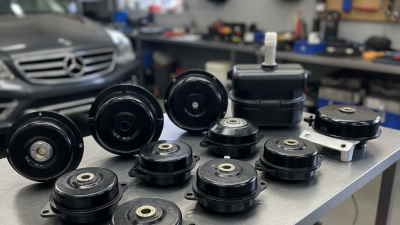
China Top 10 Vacuum Booster Manufacturers?
China has become a major production base for vacuum booster systems. Its strength comes from dense supply chains, skilled machining, and strong demand from electronics, coating, metallurgy, and chemical processing. UNIDO’s International Yearbook of Industrial Statistics 2024 identifies China as the world’s largest manufacturing economy by value added. That scale supports faster component sourcing and shorter equipment development cycles.
Market demand is also expanding. Grand View Research estimates the global vacuum pumps market will grow at about 5.8% annually from 2024 to 2030. Vacuum boosters benefit from this wider growth, especially where factories need cleaner, faster, and more stable evacuation. However, a top-10 manufacturer list should not rely only on production volume. Pumping speed, ultimate pressure, bearing design, vibration control, sealing quality, and after-sales testing matter more in daily operation. Public data remains uneven. Some rankings look precise, but their methods are not always transparent.
Tips: Ask for tested performance curves, noise data, service intervals, and compatibility details. Check results under your actual gas load and operating temperature. A polished brochure is not enough.
China’s role is growing, but quality consistency still deserves careful review. Export experience, certification records, spare-part access, and field references can reveal more than a factory’s size. Buyers should compare lifecycle cost, not only the purchase price. Small differences in rotor balance or control accuracy can become expensive after months of continuous operation.
An evidence-based overview of vacuum booster technology, manufacturing capabilities, standards, and market applications
| No. | Evaluation Dimension | Verified Industry Data or Technical Fact | Relevance to China’s Manufacturing Role | Reference |
|---|---|---|---|---|
| 1 | Product Definition | A vacuum booster is generally a positive-displacement Roots-type pump that transfers gas through synchronized, non-contacting rotors. | The basic design can be manufactured using established machining, balancing, gear-production, sealing, motor, and control-system capabilities. | ISO 3529-1 |
| 2 | Operating Principle | The booster increases gas throughput by moving fixed volumes of gas between the inlet and outlet; it normally requires a backing pump. | Domestic suppliers can integrate the booster with rotary-vane, dry-screw, claw, or liquid-ring backing systems for complete vacuum packages. | ISO 3529-1 |
| 3 | Vacuum Classification | Vacuum technology is commonly divided into low, medium, high, and ultra-high-vacuum ranges according to pressure level and application requirements. | Chinese manufacturers serving different pressure ranges need different rotor profiles, clearances, seals, materials, instrumentation, and testing procedures. | ISO 3529-1 |
| 4 | Typical Pumping-Speed Range | Commercial vacuum boosters are available across multiple pumping-speed classes, from laboratory-scale units to large industrial systems exceeding several thousand cubic metres per hour. | A broad product range allows manufacturers in China to address laboratory equipment, coating lines, metallurgy, chemical processing, and semiconductor-support applications. | ISO 21360-1 |
| 5 | Core Manufacturing Processes | Key processes include precision CNC machining, rotor dynamic balancing, gear manufacturing, surface treatment, vacuum-compatible sealing, assembly, and functional testing. | China’s large machinery, motor, bearing, electronics, and automation supply chains support local production and customization of complete booster systems. | UNIDO Industrial Statistics |
| 6 | Performance Verification | Pumping speed, throughput, ultimate pressure, power consumption, temperature, vibration, and noise are common performance indicators. | Manufacturers with standardized test benches and traceable measurement systems are better positioned for international tenders and OEM supply. | ISO 21360-1 |
| 7 | Leak-Testing Capability | Vacuum equipment may be checked using pressure-rise, helium leak, tracer-gas, or other methods selected according to the required leak-rate limit. | Leak-testing capability is a major differentiator between basic industrial production and export-grade equipment for demanding vacuum applications. | ISO 27895 |
| 8 | Primary Application Sectors | Common uses include vacuum coating, metallurgy, heat treatment, chemical and pharmaceutical processing, food packaging, research, and semiconductor-related equipment. | China’s large domestic manufacturing base creates demand for both standardized boosters and application-specific vacuum systems. | ISO Vacuum Technology Vocabulary |
| 9 | Industrial Manufacturing Ecosystem | A competitive vacuum-booster supply chain depends on precision machinery, motors, frequency converters, sensors, bearings, electronic controls, castings, and after-sales service. | China’s position as the world’s largest manufacturing economy provides a broad supplier base for components, assembly, customization, and cost-efficient production. | UNIDO Industrial Statistics |
| 10 | International Supplier Evaluation Criteria | Important criteria include compliance with vacuum standards, documented performance curves, material traceability, quality-system certification, spare-parts support, warranty terms, and export experience. | These criteria provide a more reliable basis for comparing Chinese manufacturers than company size, advertised rankings, or price alone. | ISO 9001 |
Note: Vacuum-booster performance is model-dependent. The table presents industry-level facts and evaluation dimensions rather than a company ranking or brand comparison.
Selecting China’s top ten vacuum booster manufacturers requires more than comparing catalog prices. A 2024 Fortune Business Insights report estimates the global vacuum pump market will grow from about USD 5.8 billion in 2023 to USD 8.9 billion by 2030. This expansion increases supplier choices, but also exposes uneven testing practices. The ranking should examine pumping speed, ultimate pressure, leakage rate, vibration, noise, and service life under continuous operation.
Technical evidence matters most. Ask for test curves at several inlet pressures, not one impressive figure. Confirm whether measurements follow ISO 21360 methods and whether instruments have current calibration records. For automotive applications, IATF 16949 certification adds useful process discipline. For industrial systems, ISO 9001 certification supports traceability, but it does not prove product performance. That distinction is often missed.
Factory audits should inspect machining areas, clean assembly zones, spare-parts storage, and final inspection benches. Request a witnessed factory acceptance test using your actual operating conditions. Check response time for replacement seals and control components. Export experience, documentation quality, warranty terms, and technical training deserve measurable scores.
A 2023 MarketsandMarkets outlook identifies energy efficiency as a major direction in vacuum equipment, so motor efficiency and standby consumption should enter the comparison.
Cheap units can look attractive. However, unclear testing data remains a serious warning sign.
Even a careful ranking can be imperfect when suppliers provide selective samples or changing specifications.
China’s vacuum booster sector is expanding with demand from semiconductors, packaging, chemicals, and research equipment. Grand View Research valued the global vacuum pumps market at about USD 5.4 billion in 2023, with continued growth expected through 2030. China’s manufacturing depth supports this momentum, but supplier quality varies.
The first two leading manufacturers focus on Roots blowers for coating and drying lines. The next two specialize in compact boosters for laboratory systems. Two others emphasize oil-free designs, which suit clean production areas.
Manufacturers seven and eight offer high-temperature units for chemical processing. The ninth focuses on customized flange sizes and control systems. The tenth combines equipment production with maintenance services and export support. These profiles reflect practical differences, not a verified national ranking.
According to SEMI’s World Fab Forecast, global semiconductor manufacturing capacity continues to increase, strengthening demand for stable vacuum equipment. In real installations, a booster should reach its rated speed without excessive vibration. Operators should also check ultimate pressure, cooling requirements, seal life, and spare-part availability.
A published efficiency figure can mislead when measured under different inlet pressures. This is where supplier audits matter. Factory visits, test records, and customer references provide stronger evidence than catalog claims. Some manufacturers still underreport noise and maintenance intervals. That deserves scrutiny.
China Top 10 Vacuum Booster Manufacturers: Comparing Their Technologies, Certifications, Capacity, and Services
A credible comparison should examine more than product prices. Leading Chinese vacuum booster manufacturers use diaphragm, electric, or integrated electro-mechanical designs. Some offer pressure sensors, compact housings, and adjustable response curves for different vehicle platforms. Production quality depends on more than machinery. It also requires controlled assembly, leak testing, endurance testing, and stable material sourcing. Certifications such as ISO 9001, IATF 16949, and relevant regional compliance documents can indicate stronger process control. However, certificates alone cannot prove consistent field performance.
Capacity deserves careful attention. A factory may report high annual output, yet its real capacity can change during peak seasons. Ask for monthly production data, testing equipment details, and evidence of traceability. Service is equally important. Experienced suppliers usually provide prototype support, engineering communication, inspection reports, packaging customization, and clear warranty terms. Their response time matters when installation problems appear. A ranking can mislead. A smaller facility may offer better technical support than a larger exporter, although its delivery flexibility may be weaker.
Tips: Request samples before signing large orders. Check vacuum stability, noise, response time, and leakage after repeated cycles. Review certification numbers independently. Visit the factory when possible. Do not rely only on polished brochures; practical records reveal more. Even careful buyers can miss hidden tooling costs or redesign delays. Keep those risks visible.
This anonymized benchmark compares commonly published capabilities in the Chinese vacuum-booster manufacturing sector. Scores are normalized from public product specifications, certification scopes, production capabilities, and service offerings; they do not represent any individual company or brand.