How to Choose the Best Sand Manufacturing Machine for Your Needs?
Choosing the right Sand Manufacturing Machine is crucial for any construction project. The equipment varies significantly in design and capability. You need to assess your specific requirements carefully. A single wrong choice can lead to inefficiencies and increased costs.
Many factors come into play when selecting a Sand Manufacturing Machine. Consider the material you will process and your expected production capacity. Each machine offers different features that cater to specific needs. Some might excel in producing finer sand, while others may handle larger volumes better.
Additionally, think about maintenance and operational costs. Some machines are easier to maintain than others. You might find that the most expensive option isn't always the best. Reflect on your unique circumstances. Make an informed decision to ensure your project’s success.
Understanding the Different Types of Sand Manufacturing Machines
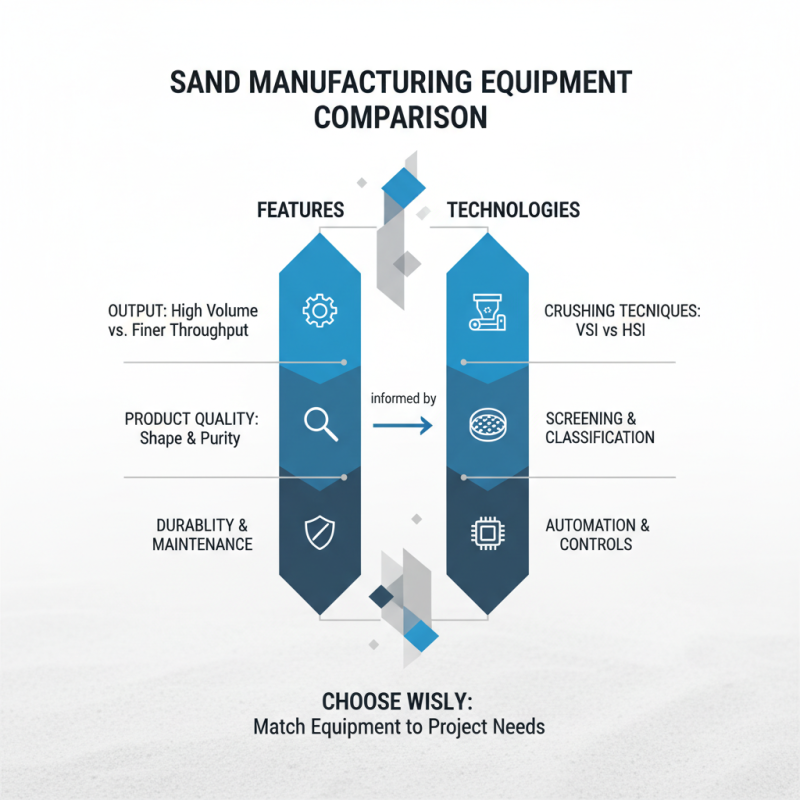
When choosing a sand manufacturing machine, it's crucial to understand the different types available. The most common types include vertical shaft impactors (VSIs) and cone crushers. According to industry reports, VSIs are favored for their ability to produce high-quality sand with fine gradations. They can achieve a cubic shape that is ideal for construction. In contrast, cone crushers are often used for producing aggregate sand, which may have a more angular shape.
The market is evolving, and data shows that the demand for high-performance sand manufacturing machines has increased by 25% over the last five years. This rise is driven by construction industry needs. Decisions on machinery should consider output capacity, material types, and end-use applications. A mismatch could lead to a lack of efficiency, which is a mistake many make. For example, using an unsuitable machine for fine sand production can result in lower quality and higher operational costs.
Design considerations also play a role. Some machines require more energy to operate than others. Maintenance is another important factor. Regular upkeep is necessary for optimal performance, yet many manufacturers overlook it. This oversight can lead to downtime and increased expenses. Making informed choices involves looking beyond just price.
How to Choose the Best Sand Manufacturing Machine for Your Needs?
| Machine Type |
Production Capacity (Tons/Hour) |
Power Requirement (kW) |
Material Type |
Application |
| Vertical Shaft Impactor |
30-50 |
75-150 |
Granite, Limestone |
Construction, Concrete |
| Hammer Mill |
20-40 |
55-100 |
Sandstone, Clay |
Glass, Brick |
| Cone Crusher |
50-80 |
90-200 |
Basalt, Gravel |
Road Construction |
| Sand Washer |
15-25 |
30-70 |
Sand, Soil |
Filtration, Cleaning |
Assessing Your Production Capacity and Performance Requirements
When choosing a sand manufacturing machine, assessing your production capacity is crucial. Consider how much sand you need daily. A small project may only require modest output, while larger operations might demand high volumes. Identify your target production rate. This involves both understanding your current needs and forecasting future demands. Sometimes, underestimating growth leads to production bottlenecks.
Performance requirements are equally important. Look into the machine's efficiency and technology. How quickly can it produce quality sand? Examine the materials it can work with. Some machines excel with specific types of raw materials, while others are more versatile. You also need to think about energy consumption. Machines that consume less energy can save costs in the long run but may have slower output. Balancing speed and efficiency is often challenging.
Remember, your choice requires careful thought. Reflect on the long-term implications. A machine that meets short-term needs may not suffice as your business grows. Be open to reevaluating your options periodically. This could reveal better solutions or newer technologies that enhance production. Ultimately, the right machine aligns with both your current and future requirements.
Evaluating Material Compatibility for Sand Manufacturing Machines
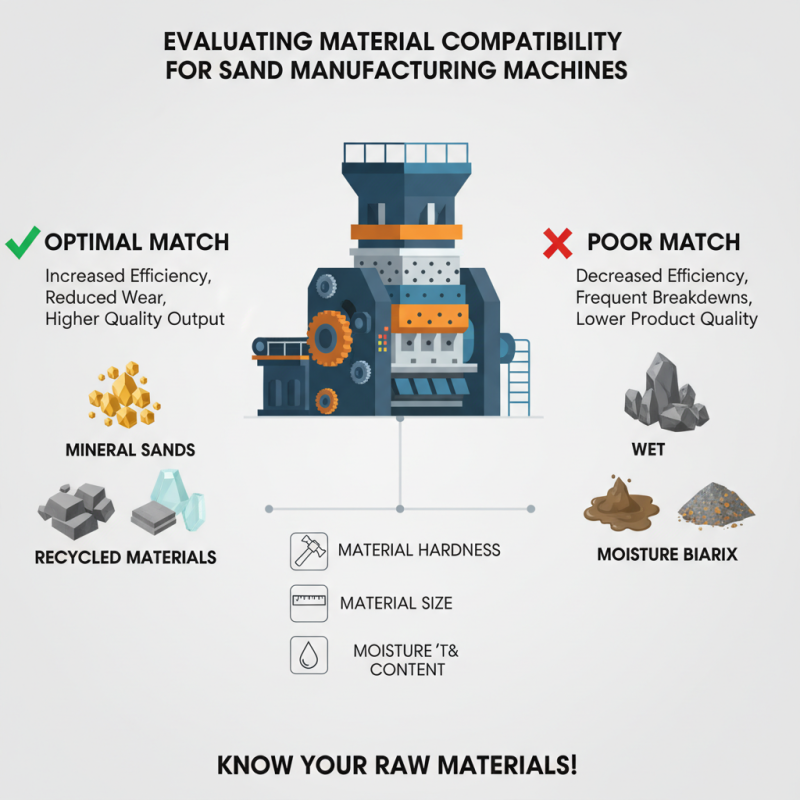
Choosing the right sand manufacturing machine depends heavily on material compatibility. Different machines excel with specific types of materials. For instance, some machines work best with mineral sands, while others are better suited for recycled materials. Understanding your raw materials is key. You must consider their hardness, size, and moisture content. If materials don't match the machine's capabilities, efficiency drops.
Testing your materials can reveal crucial aspects. A laboratory analysis may help in identifying important properties. This data guides you in selecting a machine that minimizes wear and maximizes output. Sometimes, you may find your material choice leads to unexpected challenges. Compatibility issues can cause breakdowns or lower quality sand.
Monitoring the output regularly is essential too. Is the machine struggling with the material? This could indicate a mismatch. Regular checks can help you identify these problems early. Consider varying types for better results. Not all machines are perfect; each has strengths and weaknesses. Use this knowledge wisely to make a more informed decision.
Determining Budget and Cost-Effectiveness of Sand Machines
When determining the budget for sand manufacturing machines, it's crucial to evaluate both initial costs and long-term expenses. A report from the International Journal of Industrial Manufacturing indicates that the average cost of a mid-range sand machine can range from $25,000 to $75,000. However, this figure does not encompass maintenance costs, operational efficiency, and energy consumption, which can significantly influence total expenditure.
Operational cost is a critical factor. For instance, machines with lower energy consumption can yield savings over time. A well-maintained machine can have a lifespan of 10-15 years, but neglecting regular upkeep could lead to higher repair costs. According to a study from the Sand Production Association, companies that invest in regular maintenance experience 30% lower operational costs than those that don’t. Ultimately, choosing the right machine involves balancing up-front costs with ongoing expenses and potential productivity gains.
Additionally, consider the production capacity relative to your needs. A machine that produces 30 tons of sand per hour may seem beneficial, but if your demand is only 10 tons, it may not offer cost-effectiveness. Investing in equipment that exceeds your needs may lead to wasted resources and underutilization. Understanding your specific requirements is vital to making an informed decision.
Cost-Effectiveness of Sand Manufacturing Machines

 +86-13516964051


 CONTACT NUMBER
 CONTACT NUMBER